Select a case study:
Context & Challenge
When I joined allUP, the company was experiencing rapid growth, reflected in a rising number of clients and job opportunities that needed to be published quickly on the platform. Although the product already had a live iOS app, the job creation and publishing process was highly manual, fragmented across multiple tools, and not designed for scale.
New opportunities required extensive backstage configuration, heavy coordination across teams, and workarounds to support non-iOS applicants. As volume increased, this setup created operational risk, slowed down time-to-market, and concentrated critical knowledge in a single role.
I was hired with two clear objectives:
- Design a sustainable, scalable, and efficient job publishing process
- Increase speed and throughput, enabling new opportunities to go live as fast as possible
Problem
The initial workflow suffered from several structural limitations:
- Manual job setup across multiple tools and systems
- No centralized orchestration of tasks, dependencies, and ownership
- High coordination cost between Operations, Product, Marketing, and Engineering
- Separate and fragile application flows for Android users
- Low automation and high cognitive load
Without a structural redesign, operational complexity would continue to grow faster than the business itself.
Approach & Role
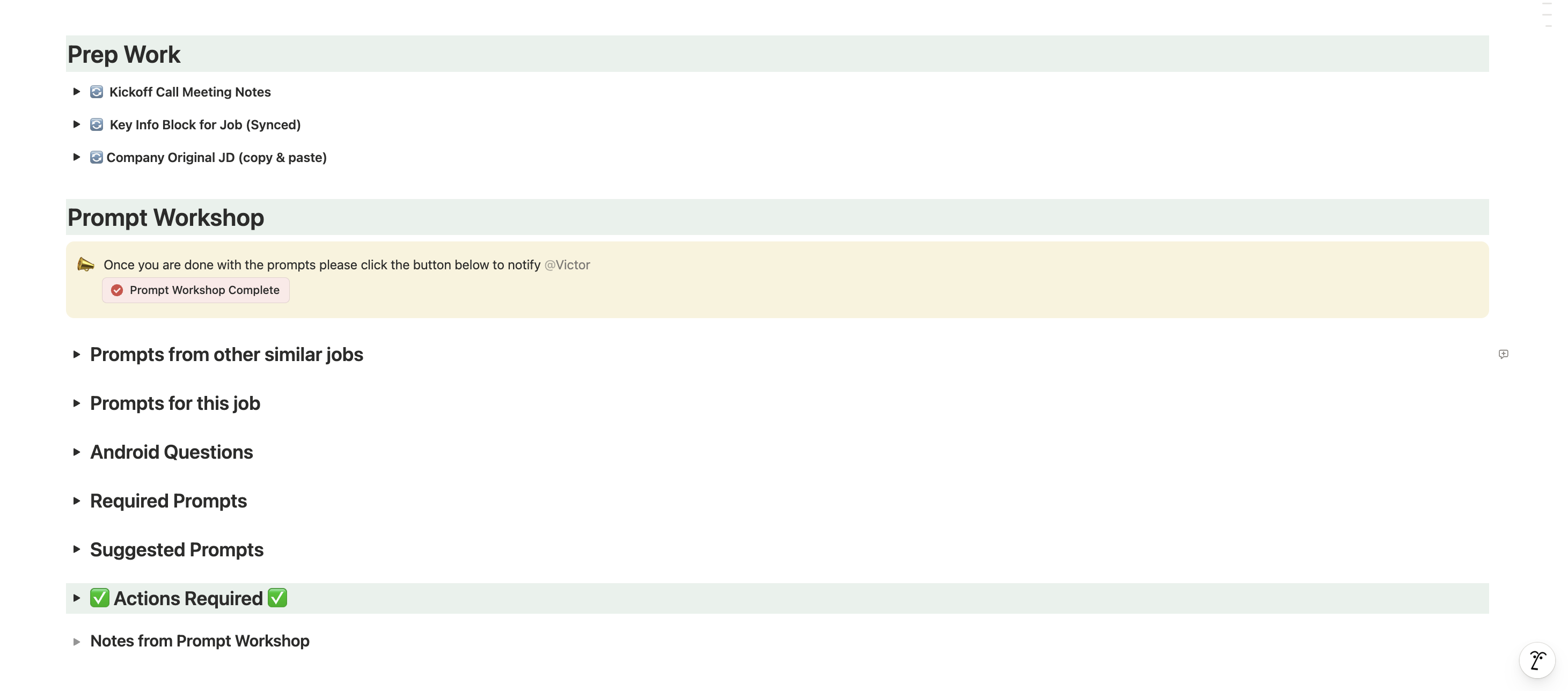
I designed and operated a centralized, SOP-driven workflow, using Notion as the operational control layer during the company's early scaling phase.
My responsibilities included:
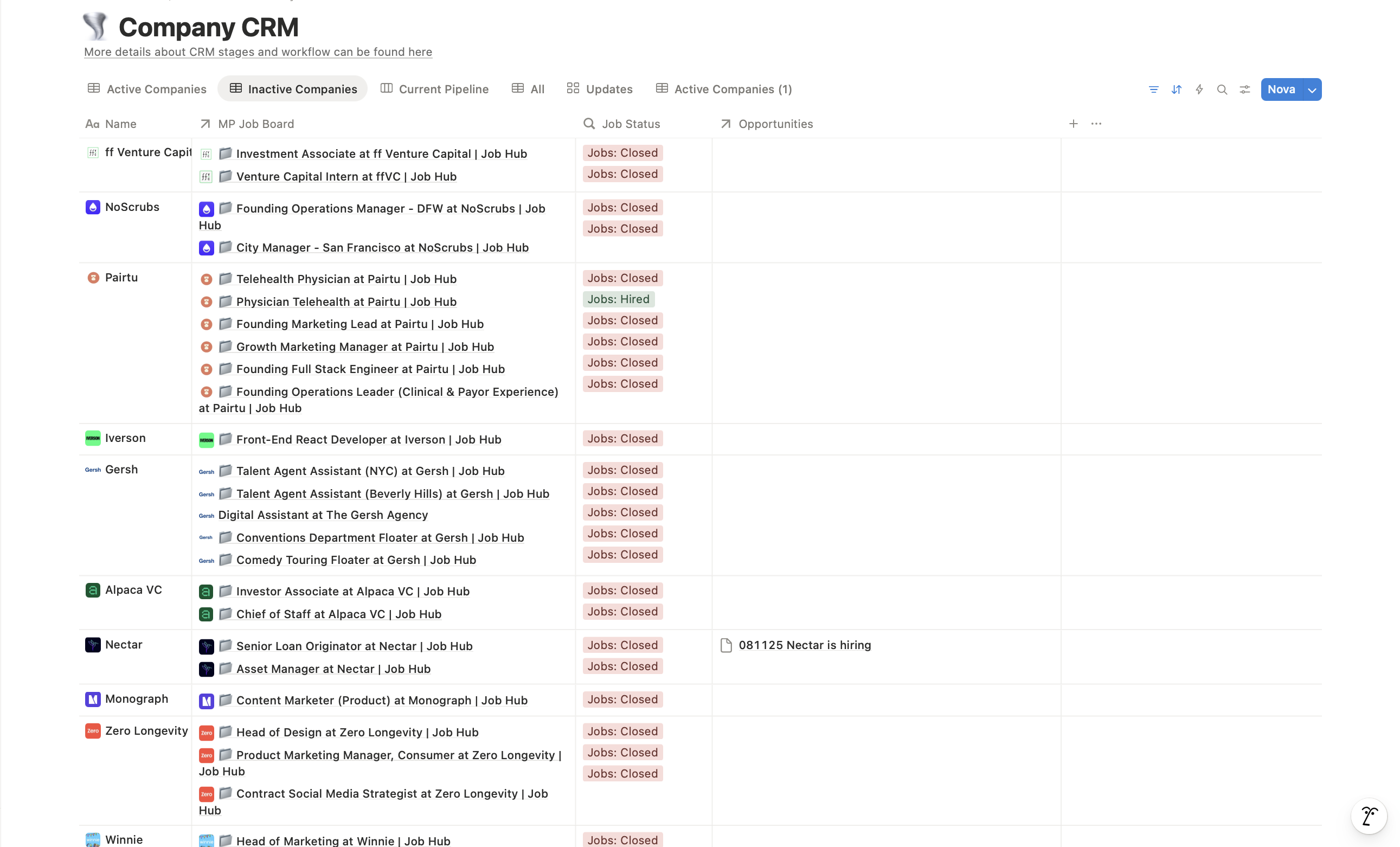
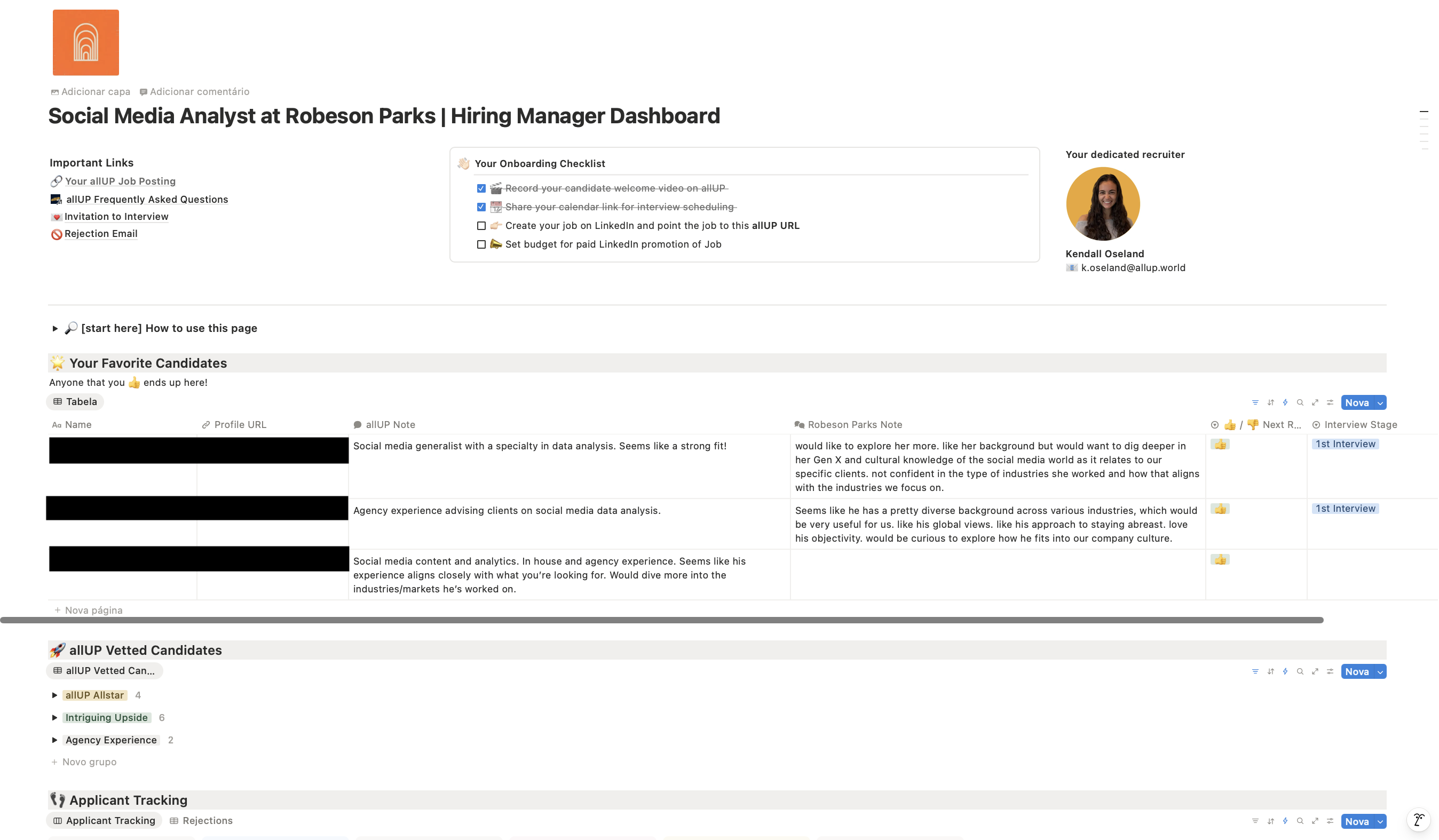
- Building a lightweight CRM in Notion to track clients and their job opportunities
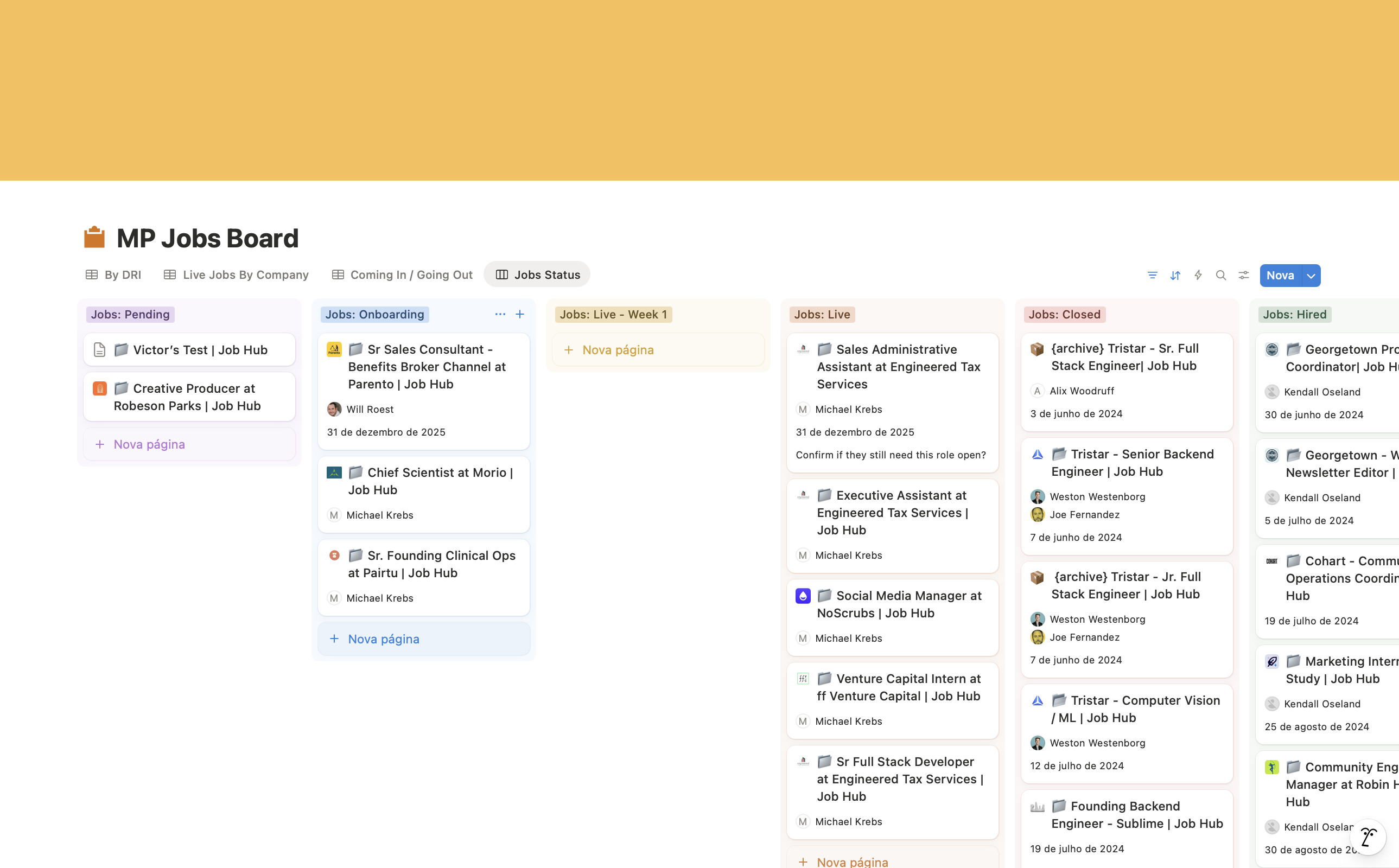
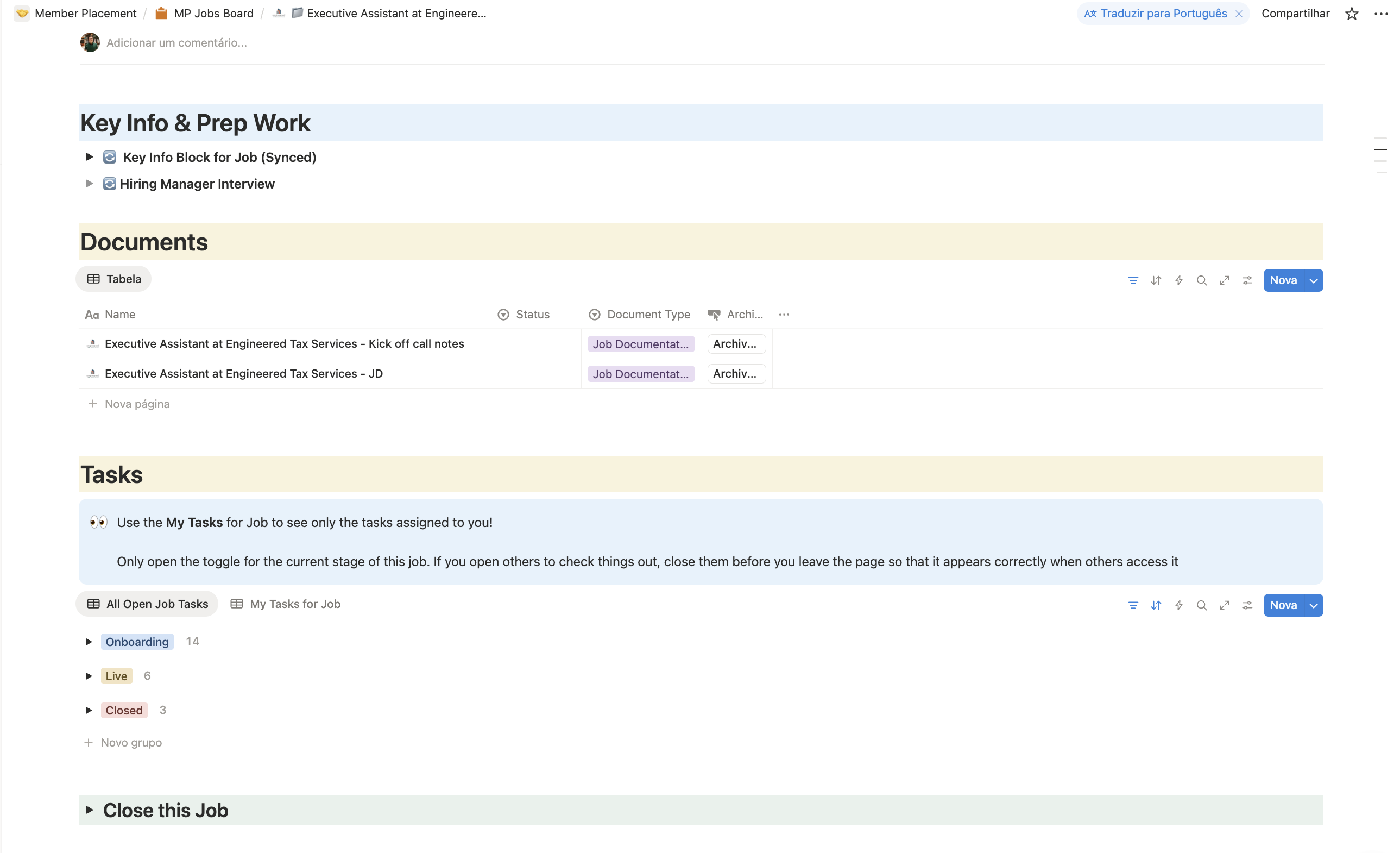
- Creating job-level operational cards to orchestrate all required actions
- Defining a standardized SOP with clear ownership across teams
- Centralizing all job-related information (role details, compensation, location, workplace type, job descriptions)
- Managing the end-to-end job configuration and publishing process
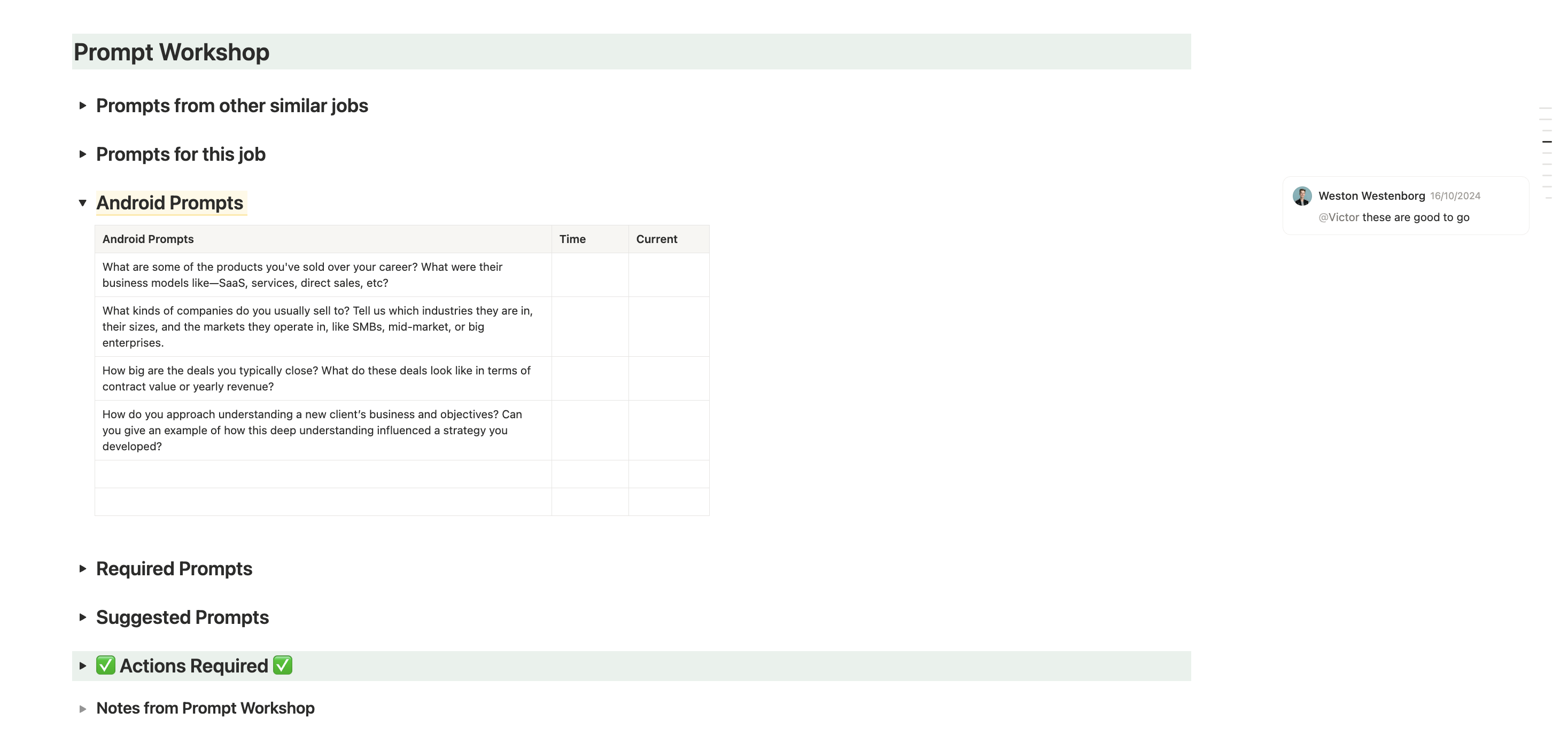
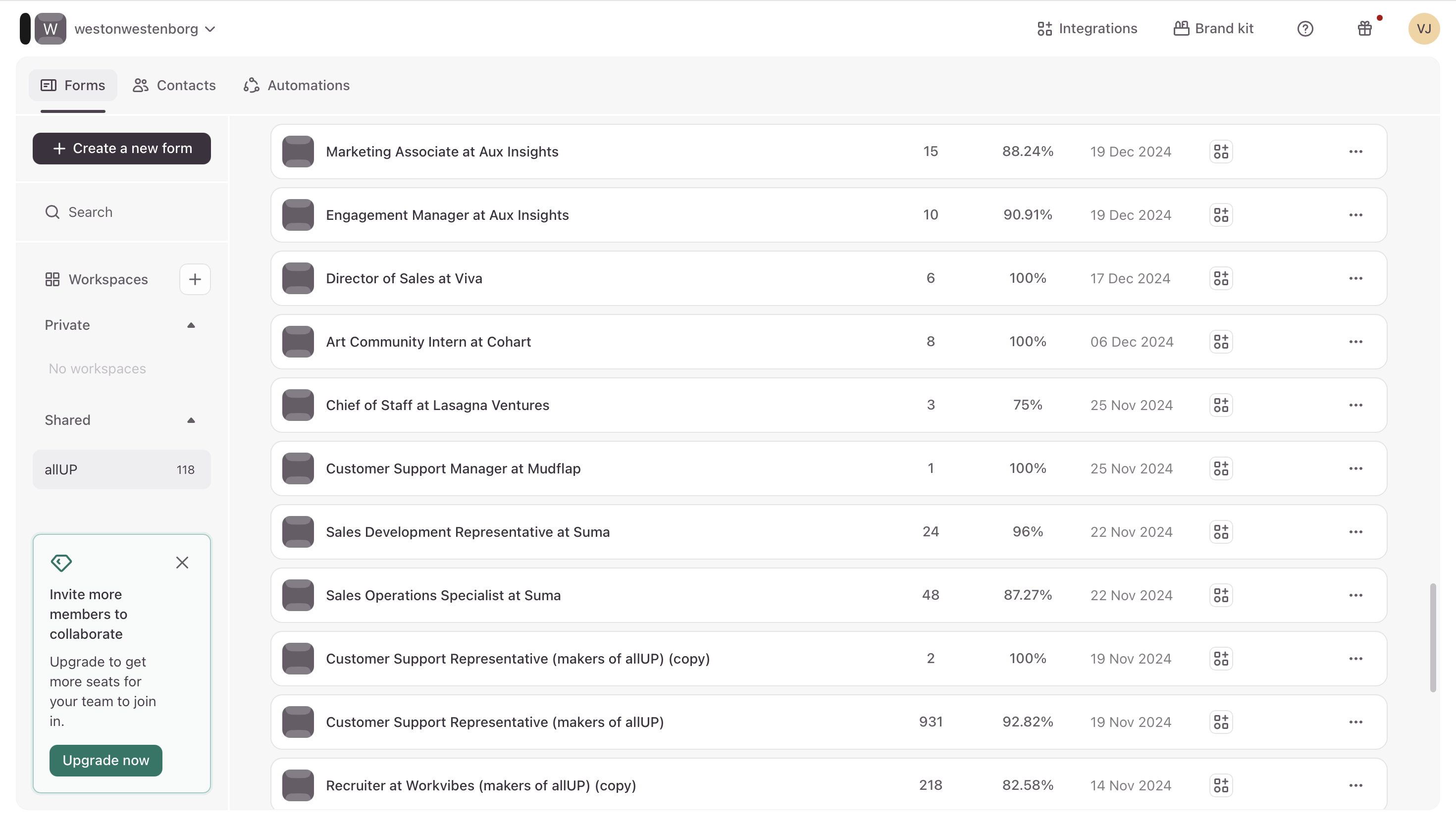
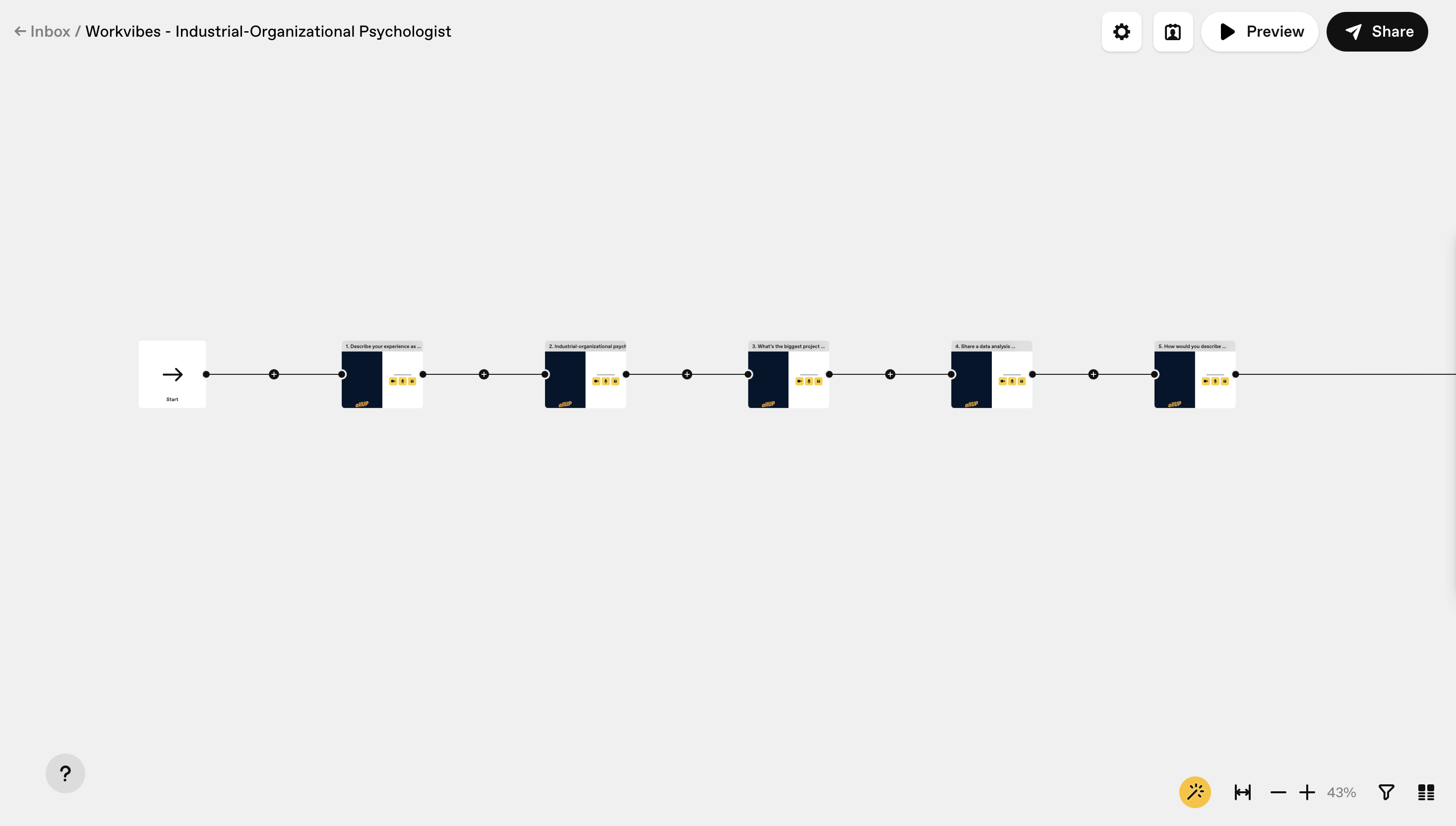
At that stage, I also operated a parallel application flow for Android users, coordinating configurations across tools such as Typeform, VideoAsk, and Zapier to ensure applicants received consistent communication and status updates.
Operational Evolution & Automation
Due to my ownership of the full workflow, I also became responsible for identifying opportunities to simplify and automate the operation. I led this process in close collaboration with Weston (COO & Co-Founder).
Over time, we progressively reduced complexity and removed temporary workarounds by:
- Eliminating parallel application flows and third-party dependencies
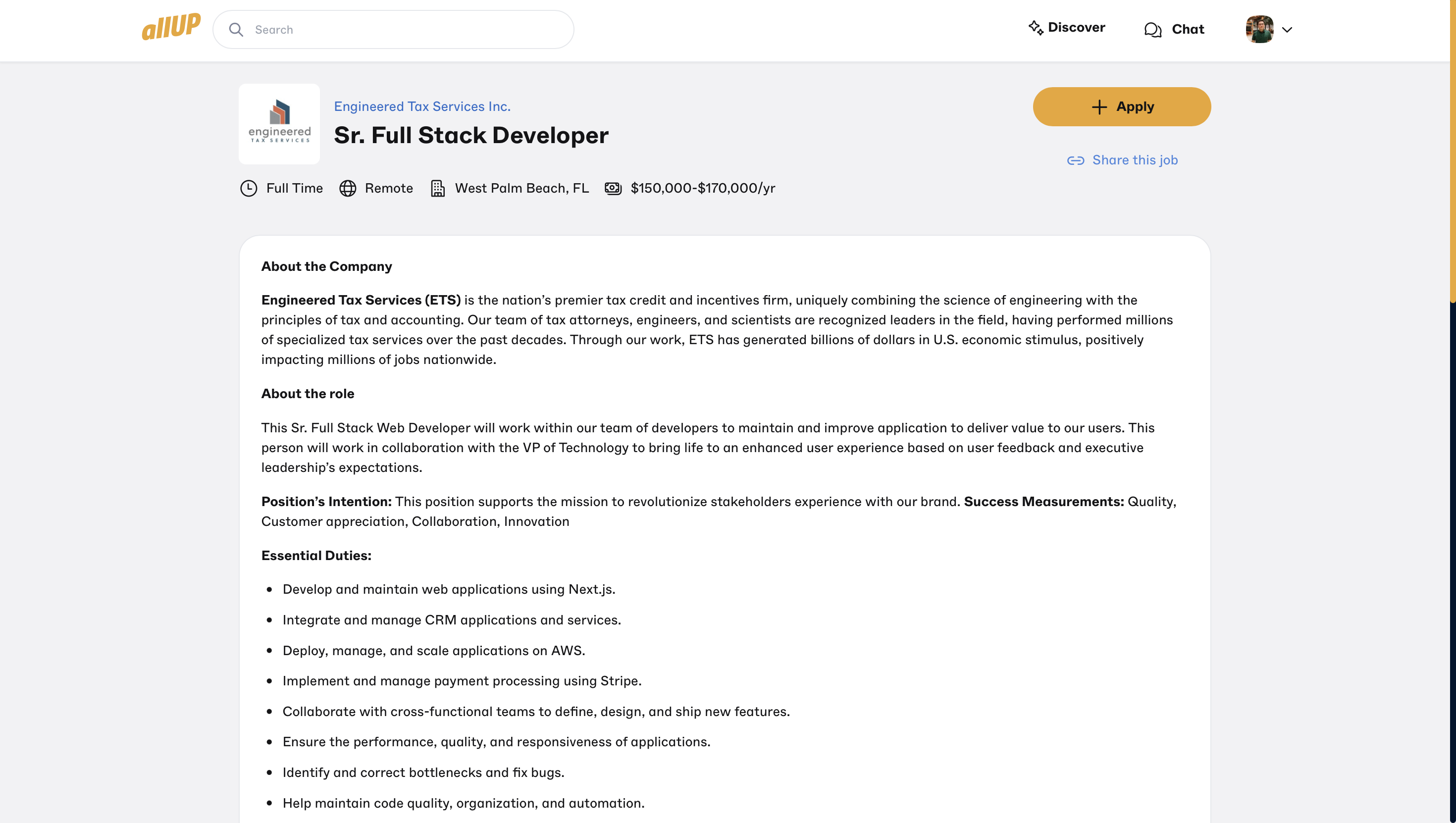
- Enabling web-based applications, allowing candidates to apply regardless of device
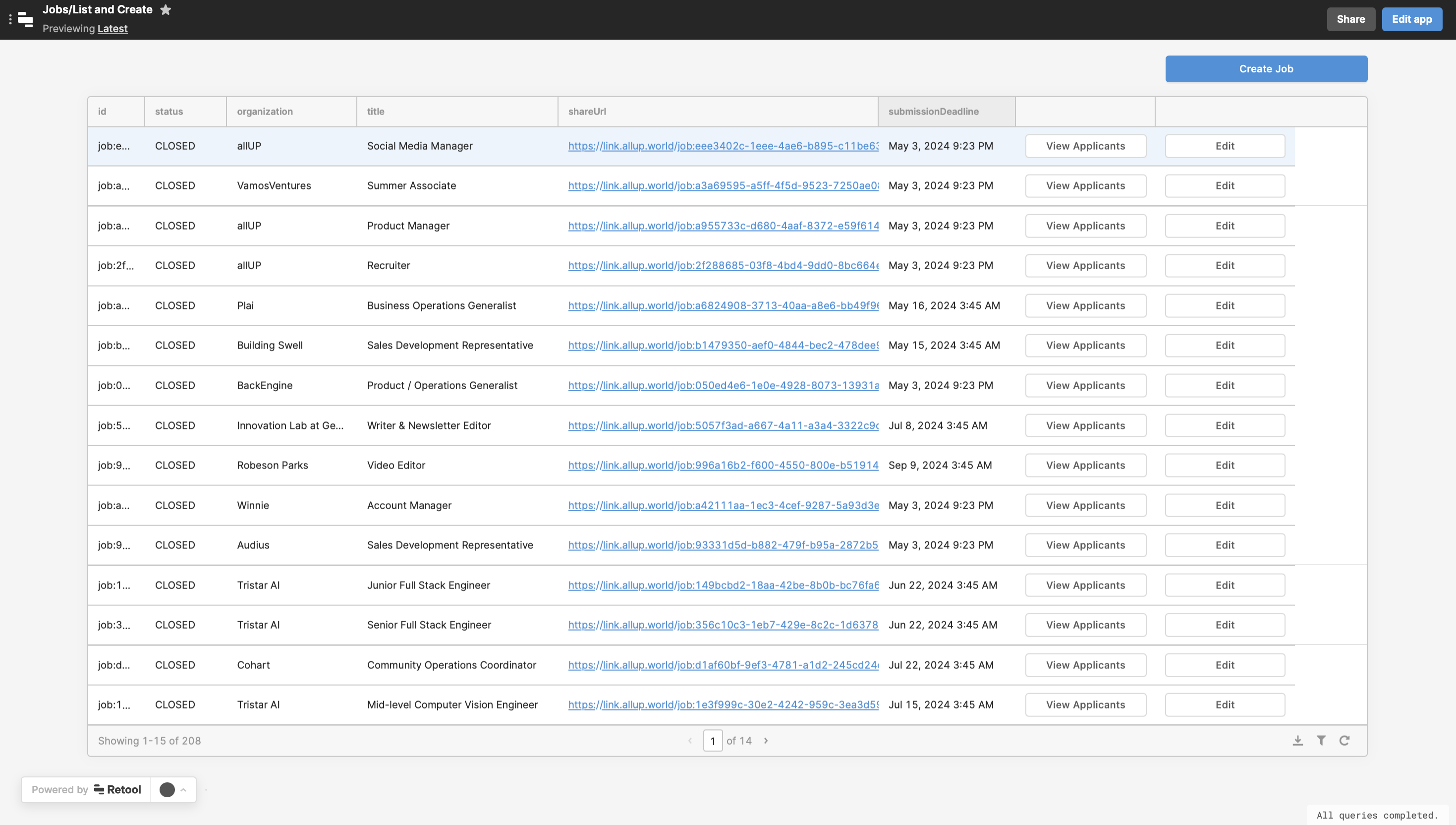
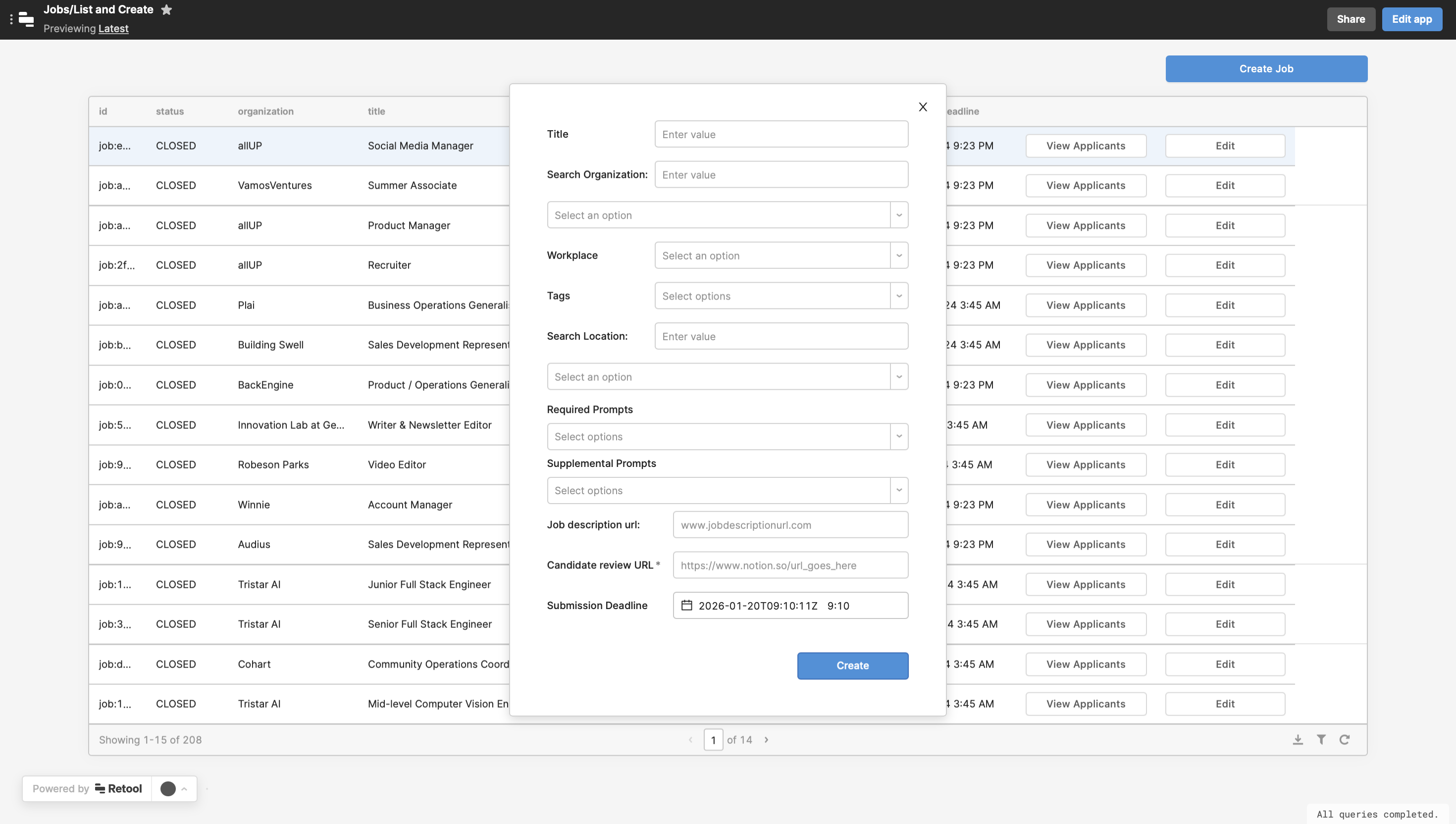
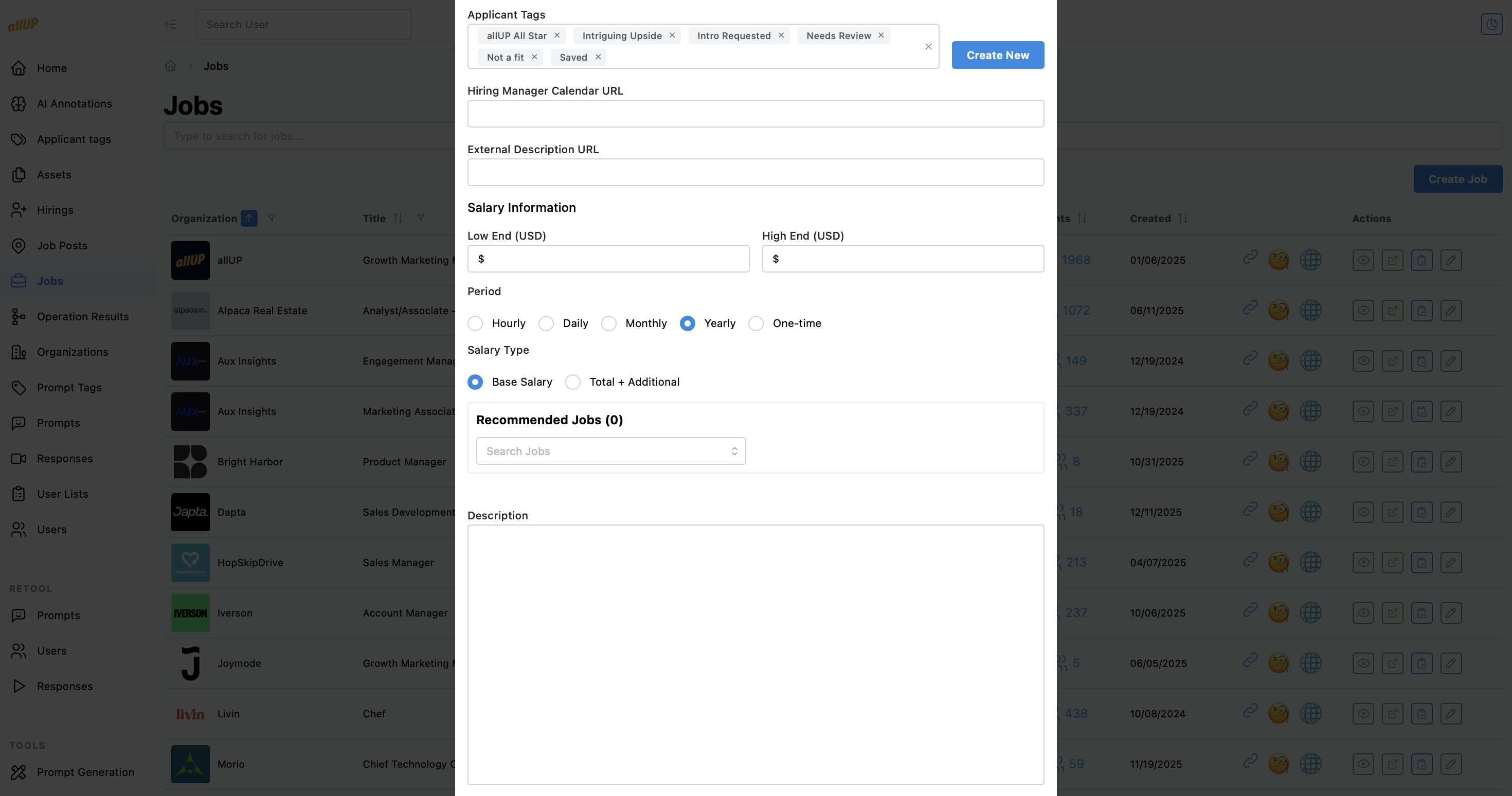
- Designing and implementing a unified job creation flow within the admin system
- Migrating job descriptions and configuration logic from Notion directly into the admin
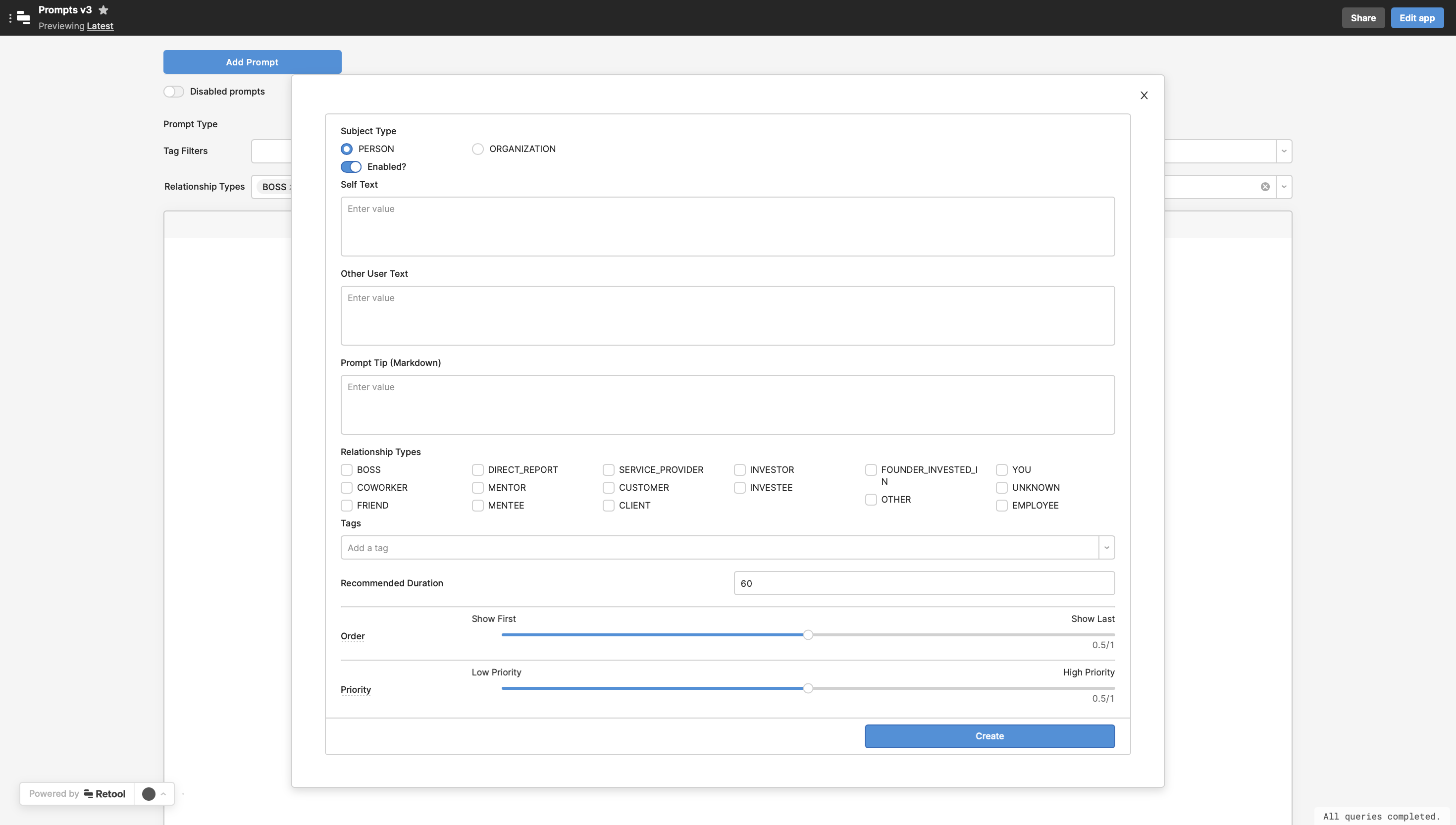
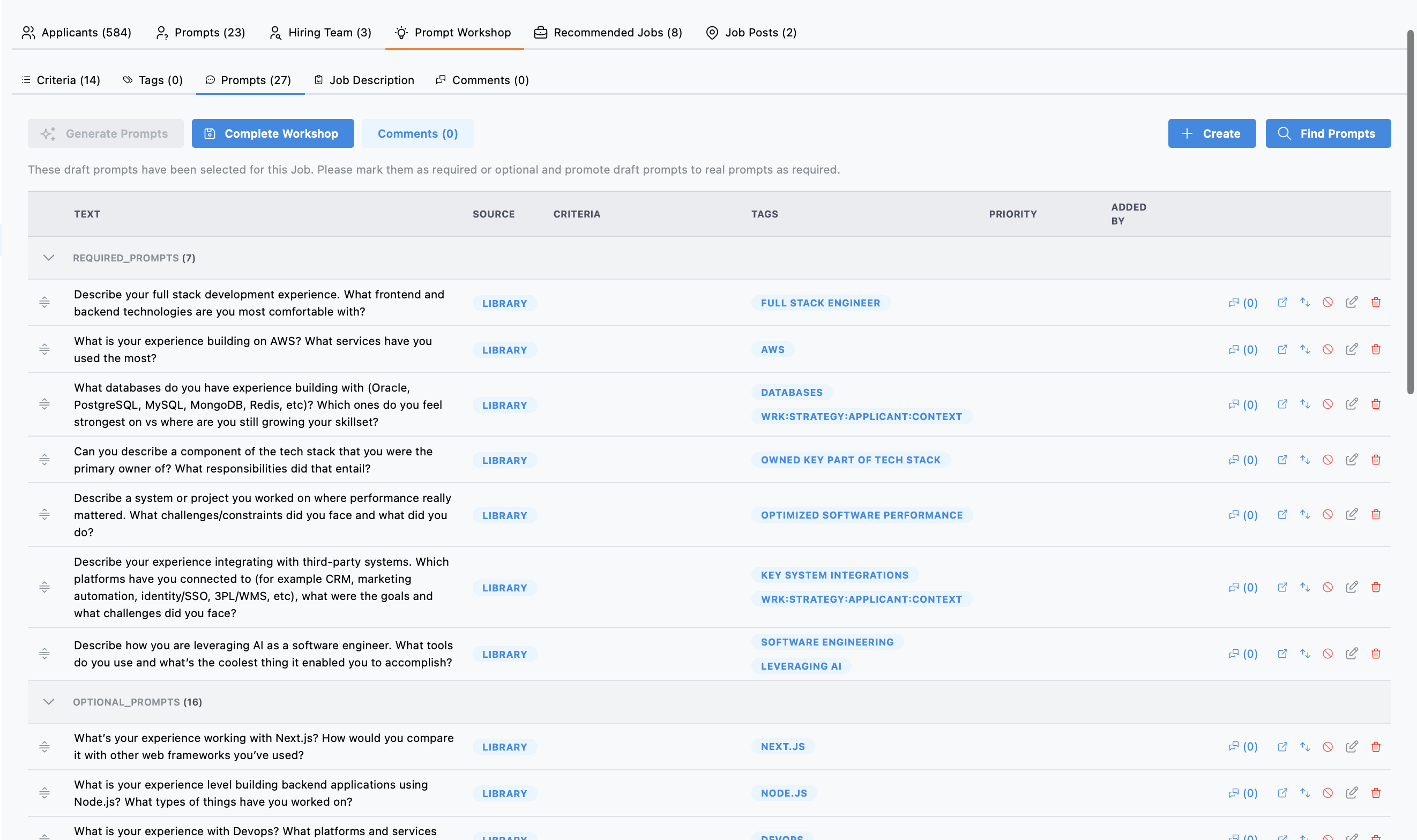
- Leveraging existing Prompt Workshop references to independently create prompts without cross-team dependency
This transition transformed the operation from a tool-heavy workaround into a clean, productized workflow.
Output & Results
- Successful operation of a scalable job publishing workflow during a high-growth phase
- Progressive automation and simplification of the full job lifecycle
- Removal of Typeform, VideoAsk, Zapier, and other temporary tools
- Significant reduction in time-to-publish, with many roles going live immediately after intake
- Reduced operational risk and dependency on manual coordination
- Creation of a streamlined, admin-driven flow capable of supporting scale
- Strong collaboration with the COO & Co-Founder in shaping the platform's operational evolution
Before vs. After Workflow
Before
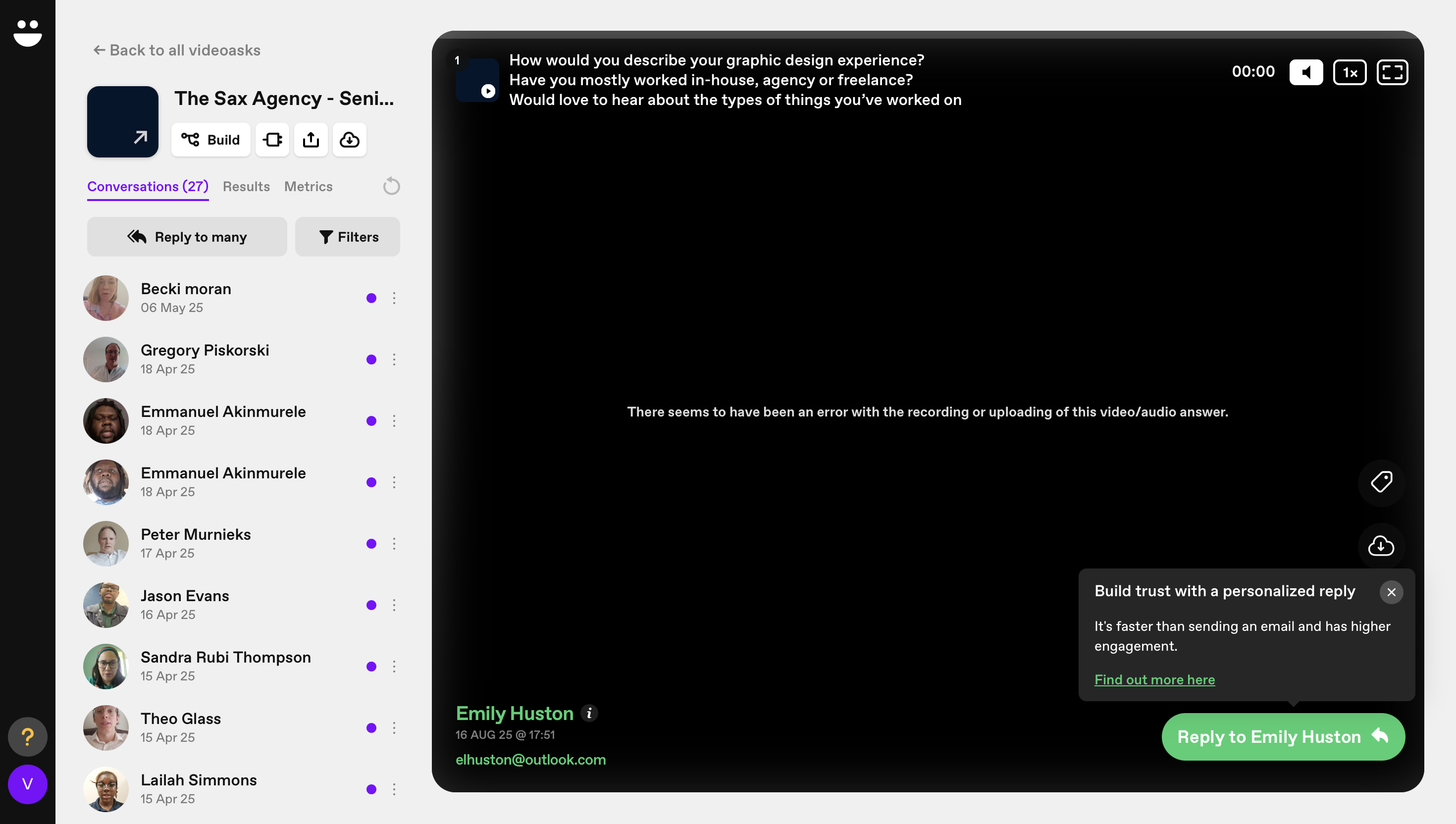
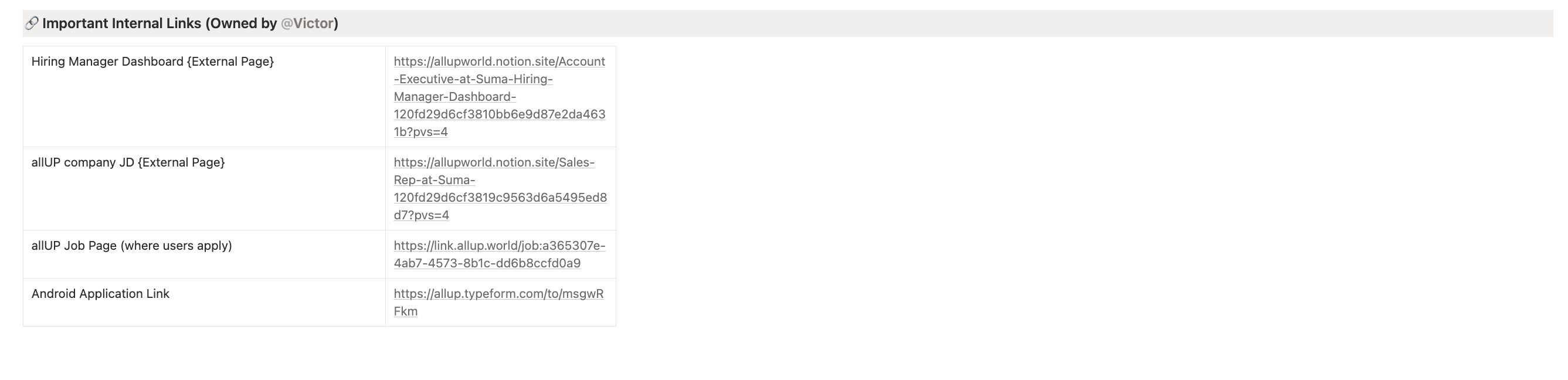
- Job intake → Notion → Admin → Typeform → VideoAsk → Zapier
- Separate iOS and Android application flows
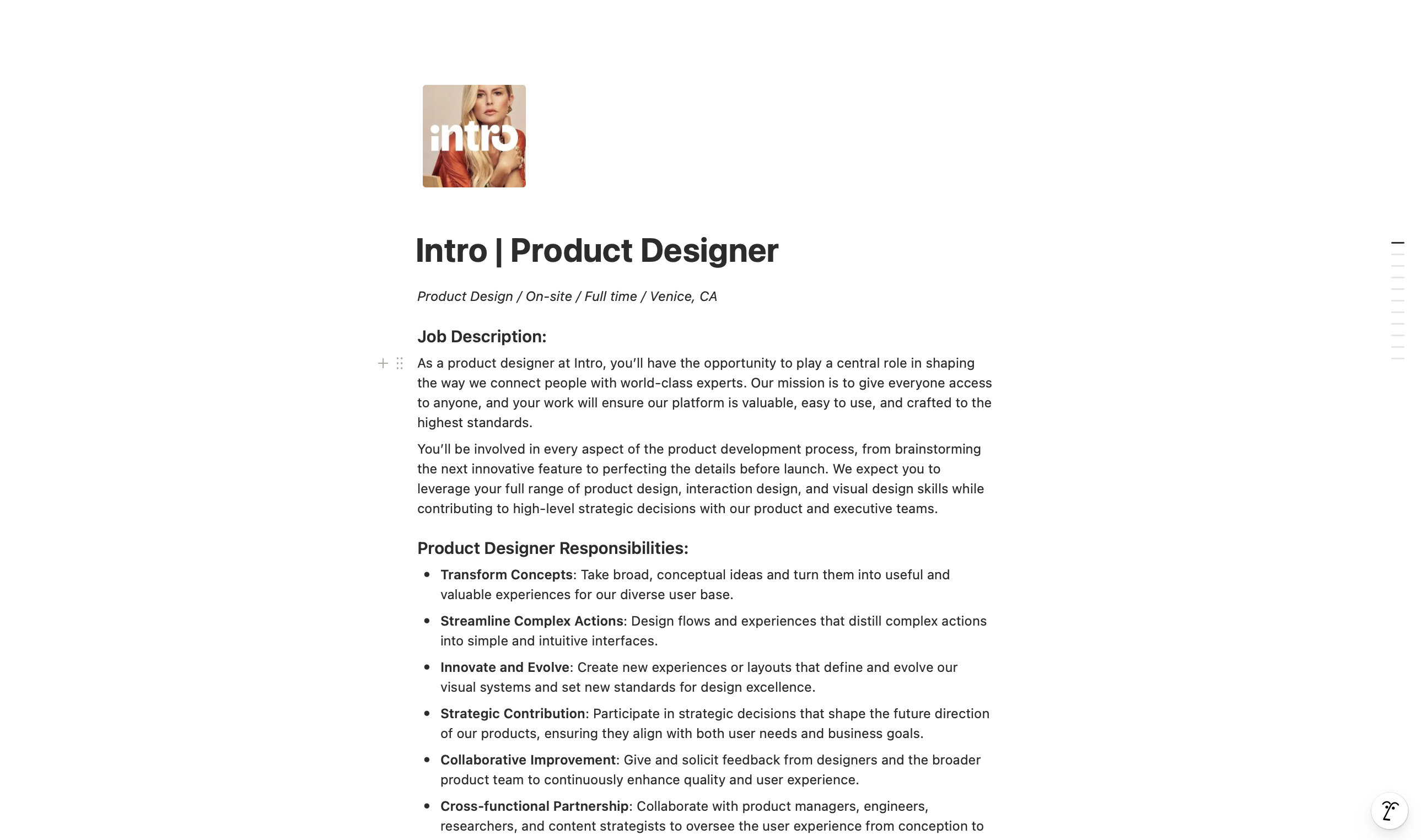
- Job descriptions and prompts distributed across tools
- High manual effort and coordination overhead
After
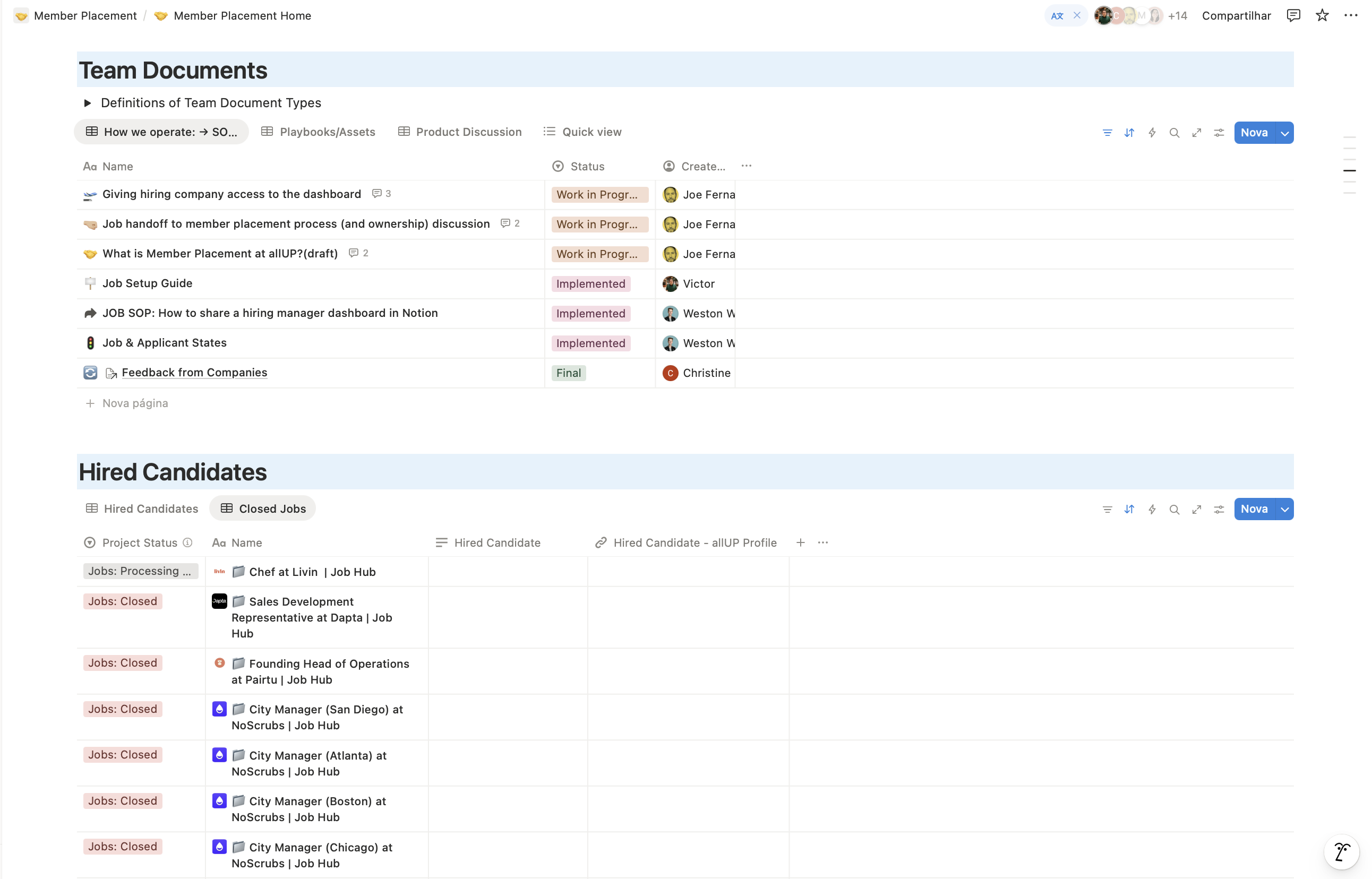
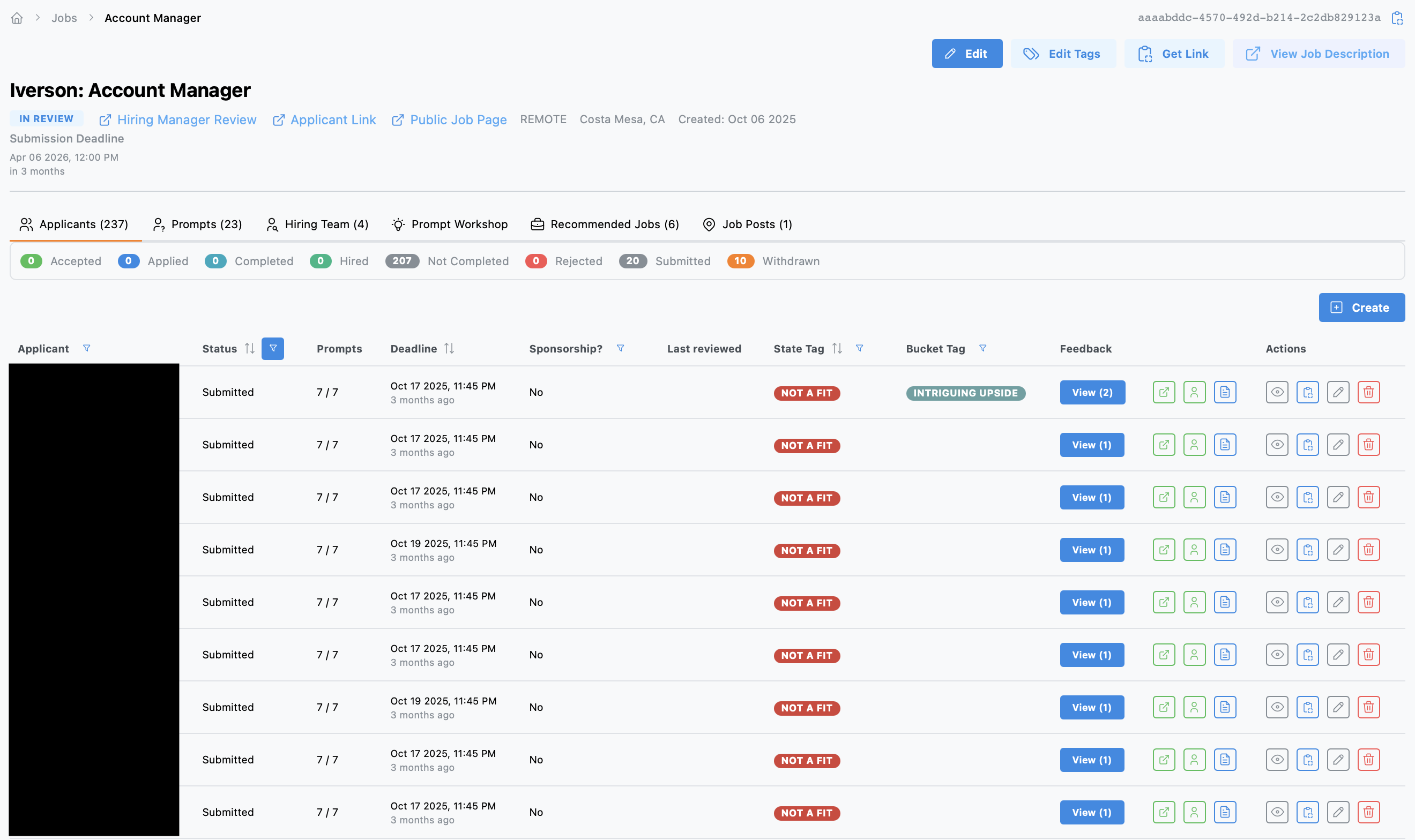
- Slack notification → CRM check → Job tracked in Notion (status only)
- Full configuration completed directly in the admin
- Unified web-based application flow
- Prompt Workshop created independently using existing references
- Job goes live immediately after setup
Visual: The Old Process
The original workflow relied on multiple disconnected tools, requiring manual coordination across systems.
Visual: The New Process
The streamlined workflow consolidates all job management into a unified system with clear status tracking and centralized configuration.

Context & Challenge
As allUP scaled its marketplace, publishing jobs on the platform was not enough. The company needed to ensure consistent candidate demand for a growing number of active opportunities, while maintaining operational control over cost and efficiency.
To support this, allUP created a dedicated LinkedIn page — Jobs by allUP — designed to distribute live opportunities and route candidates directly into the platform. At this stage, LinkedIn operated under a variable, pay-per-post cost model, which made distribution efficiency a critical operational concern.
I was responsible for operating, measuring, and evolving this distribution layer, ensuring the marketplace remained balanced as volume increased.
Problem
Under the variable-cost model, job distribution presented several risks:
- Each job post required manual setup and paid distribution, often city by city
- Costs scaled linearly with volume, increasing financial exposure
- Limited visibility into which roles, cities, or categories generated demand more efficiently
- No structured criteria to decide when to repost, pause, or stop investing in a role
Without a clear performance and cost-feedback loop, scaling distribution would quickly become inefficient and unsustainable.
Approach & Role
Once a job was live on the allUP platform, I managed the end-to-end LinkedIn distribution workflow, including:
- Structuring job information for LinkedIn distribution
- Linking applications directly back to the allUP platform
- Publishing roles across multiple U.S. cities, especially for remote positions
To operate efficiently under variable costs, I built a performance tracking framework focused on operational decision-making. This included:
- Tracking views, applicants, and spend per job
- Analyzing performance by role type, city, and category
- Identifying efficiency patterns across markets
- Defining saturation thresholds to guide reposting and spend allocation
Performance Tracking & Cost Control (Variable-Cost Phase)
Before any fixed-cost agreement existed, I developed and maintained operational dashboards to:
- Monitor job-level performance in real time
- Compare cost efficiency across locations and roles
- Detect diminishing returns as applicant volume plateaued
- Support decisions to scale, pause, or reallocate distribution
This ensured that growth in job volume remained data-driven and cost-aware, even as demand increased.
Scaling & Cost Optimization
As LinkedIn distribution costs became a significant operational expense, I supported the transition to a fixed-cost posting agreement, enabling near-unlimited job distribution for a monthly fee.
With this shift:
- The operation scaled from approximately 50 active job posts to 1,200+ concurrent postings
- Cost per applicant decreased as volume increased
- High posting volume became a strategic requirement to fully leverage the fixed-cost model
At this stage, optimization moved from individual post efficiency to portfolio-level distribution strategy, ensuring the fixed cost was amortized across a large number of active roles.
Output & Results
- Operationalization of Jobs by allUP as a scalable job distribution layer
- Strong cost control during the variable-cost phase through performance tracking
- Successful transition to a fixed-cost, high-volume distribution model
- Ability to sustain 1,200+ concurrent job postings
- Reduced cost per applicant through scale
- Clear understanding of demand dynamics by role and city